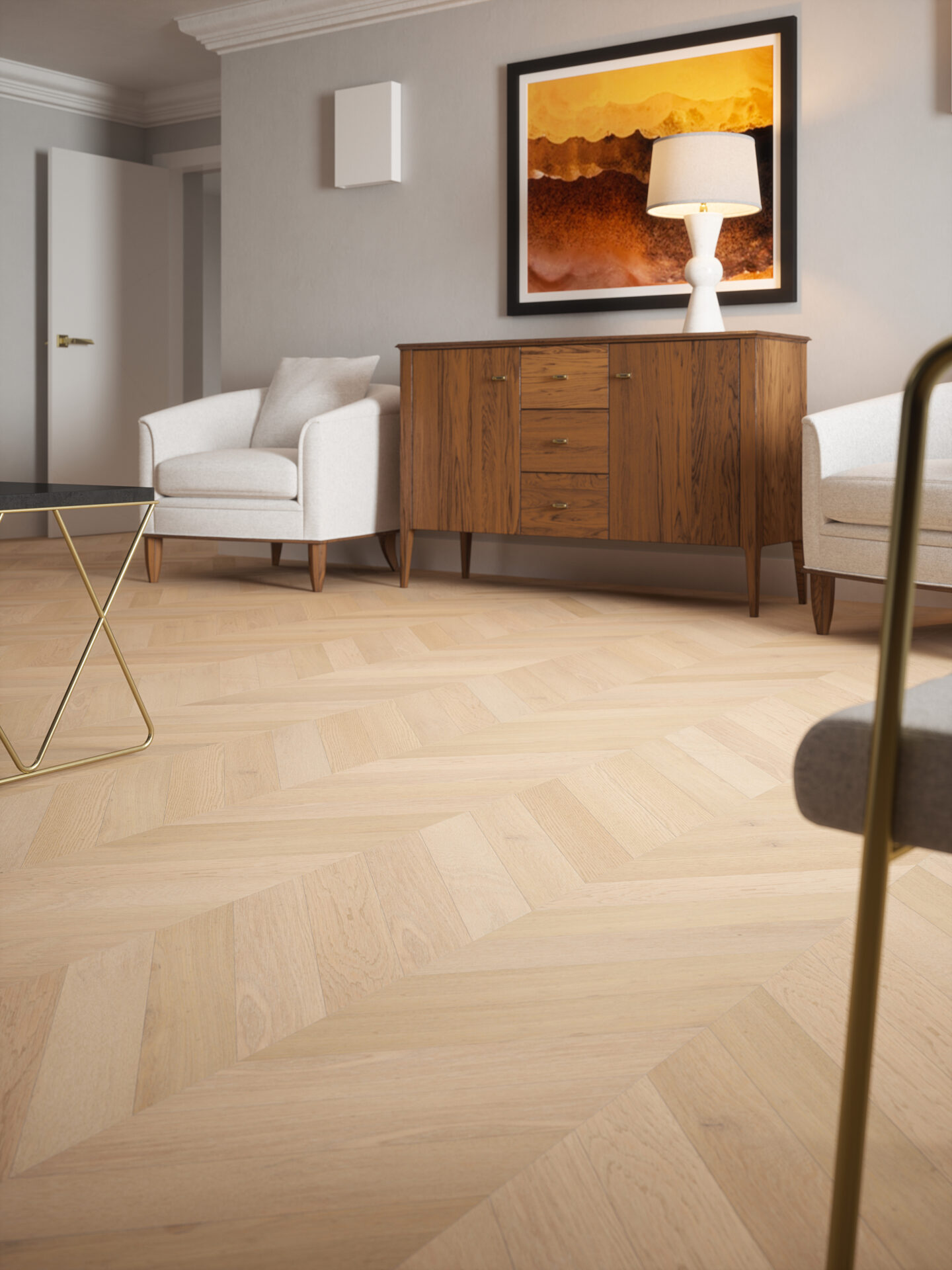
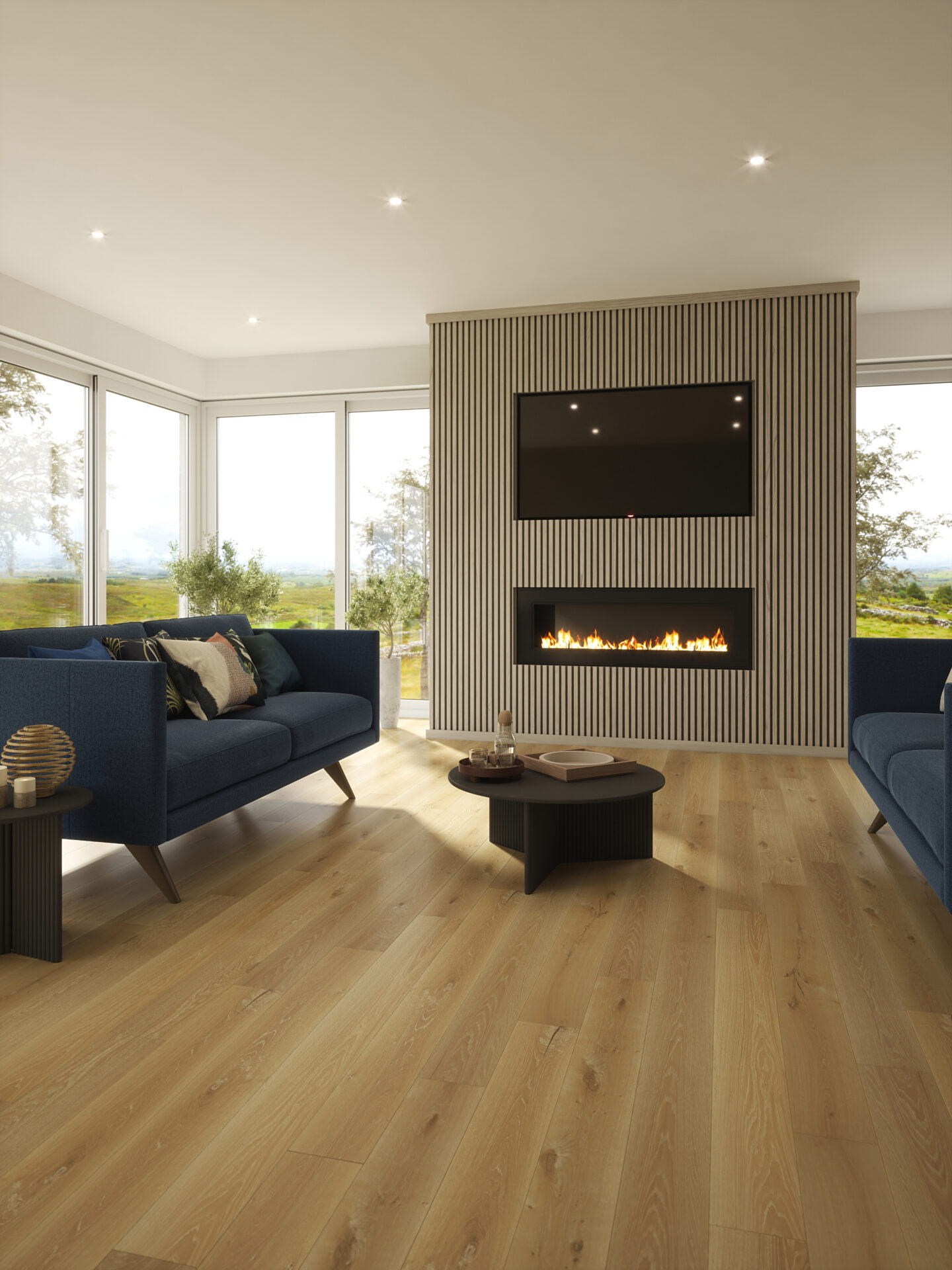
Hardwood Flooring

Hardwood Flooring


Hardwood Flooring
Stylish and Luxurious
Hardwood flooring, often called engineered flooring, is made by combining a real wood top layer with a strong base layer, usually plywood or HDF. This layered design gives you the natural look of solid wood while adding stability and durability.
Hardwood flooring comes in different widths, lengths, and top-layer thicknesses. A thicker top layer can be sanded and refinished several times, depending on the finish, which helps your floor last longer.
Benefits of Hardwood Flooring
What makes Hardwood Flooring the right choice

Authentic Beauty

Superior Stability

Refinishable Surface

Comfort Guaranteed
Grading
Grades group hardwood flooring with similar qualities, bringing a degree of consistency to products from different mills. Grades tell the purchaser what to expect when buying products, including surface characteristics, required lengths, and colour. Grades are established through industry mill certification programmes, or by hardwood flooring manufacturers that determine their own classifications and create their own grades.
Canadia Proprietary Grades
Prime: these floors generally have a very uniform grain pattern and appearance. They are consistent in colour, with only small variations. Prime grade floors have few, if any, knots which will be filled if necessary. These knots will be small in size.
Architectural/Natural: these floors have a more varied natural-look, in comparison to Prime Grade. They are less uniform which means that a small amount of colour variation is allowed. Several live knots are allowed. These knots are small to medium in size and filled.
Character/Rustic: typically, these floors have a medium colour variation. An unlimited number of knots are allowed. These knots will be live and dead, large and filled. Small cracks are also permitted, and these will be filled.
Super Rustic: these floors have a very distinctive old, time-distressed and then repaired appearance. They have the widest range of colour variation out of the four grades. Live and dead knots and cracks are allowed and these are unrestricted in size. Small unfilled cracks are also allowed.
Frequently Asked Questions
Most of our hardwood flooring works well with underfloor heating systems. Its stable construction handles temperature changes better than traditional solid wood flooring.Review some of the most common questions about hardwood flooring below:
| What is hardwood flooring? | Hardwood flooring (also known as Engineered flooring) is a multi-layer construction with a real wood veneer top layer bonded to a stable ply base. This design combines the authentic look of solid wood with enhanced stability and versatility. |
| How is hardwood flooring different to solid wood? | Hardwood flooring uses a layered construction with a stable core, making it more resistant to changes in heat and humidity compared to solid wood. This added stability makes it suitable for a wider range of installations. |
| How thick is the top layer on hardwood flooring? | The real wood top layer can vary in thickness. Thicker top layers provide longer lifespan and more refinishing options. |
| Is hardwood flooring suitable for underfloor heating? | Most of our hardwood flooring works well with underfloor heating systems. Its stable construction handles temperature changes better than traditional solid wood flooring. |
| How long does hardwood flooring last? | With proper care and maintenance, hardwood flooring typically lasts 20-30 years or more. Floors with thicker top layers can be refinished to extend their lifespan even further. |